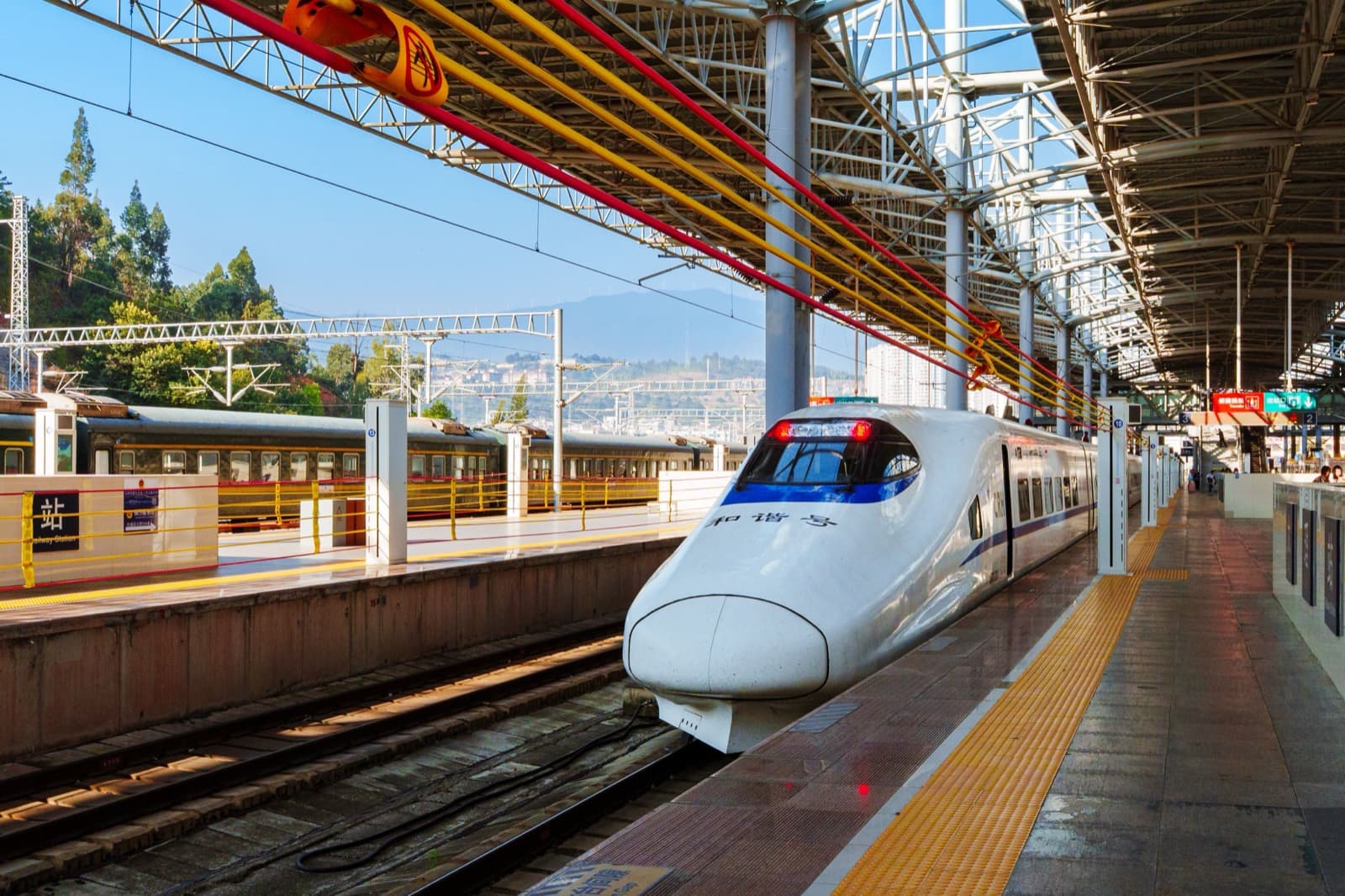
Since the Laos–China Railway opened in late 2021, the trip from Vientiane to Vang Vieng has gone from a four-hour mountain bus ride to roughly an hour on a modern train. It is the easiest way to move between the two towns, but the stations are out of town and the ticketing has quirks, so a little planning helps.
Trains and travel time
Several trains run each way daily: fast C-class services that run at up to 160 km/h and cover the leg in about an hour, plus a slower ordinary K-class train. The fast trains are the ones most travelers take. Morning and late-afternoon departures are the most popular and sell out first.
Fares
Domestic fares are set in kip and depend on the class of seat and type of train. For Vientiane–Vang Vieng, expect roughly 171,000 kip for second class and 273,000 kip for first class, per person, at the time of writing. Prices quoted by online agents in dollars include their service fee and can be double the counter price. Children's and luggage rules follow the railway's own policy, so check when you book.
How to buy tickets
LCR Ticket app: the official Laos–China Railway app (iOS and Android) sells tickets for the Lao section and accepts BCEL OnePay, Visa, WeChat, and Alipay. Some foreign cards are rejected and registration may ask for a Lao phone number, so install it once you have a Lao SIM and try it first — it is the cheapest route. Station counters: tickets go on sale about three days before departure. Bring your passport; the name and passport number are printed on the ticket. Agents and hotels: travel agencies and many hotels will buy the ticket for you for a fee, and online agents let you book weeks ahead at a mark-up. Worth it for a weekend or a holiday when you cannot risk a sold-out train. Whichever way you buy, do it one or two days ahead in high season.
Vientiane station
Vientiane (Khamsavath) station is about 15 km northeast of the centre, a 30–40 minute drive. Options: a LOCA car booked from your hotel, a tuk-tuk, or shared minivans that leave from the centre. Allow extra time in the morning rush.
Vang Vieng station
Vang Vieng station sits a few kilometres north of the town centre. Shared songthaews and tuk-tuks meet every arriving train and drop you anywhere in town for a flat per-person fare; the ride takes about 10–15 minutes. For the return, ask your guesthouse to arrange a pickup or book a LOCA car the day before, since drivers are scarcer at dawn.
At the station
Security works like an airport: bags are scanned and your physical passport is checked against your ticket at the entrance and again at the gate, so a photo of your passport will not do. Arrive 45–60 minutes before departure. Boarding closes several minutes before the train leaves. Large luggage travels with you in the carriage racks; there is no separate baggage car.
Onward from Vang Vieng
The same line continues north to Luang Prabang (roughly an hour further) and on to Boten on the Chinese border, so Vientiane, Vang Vieng, and Luang Prabang chain neatly into one trip.
If the train is full
Minivans and buses still run the road route from Vientiane's northern bus station and take four to five hours, longer in the rains. Book through your hotel.