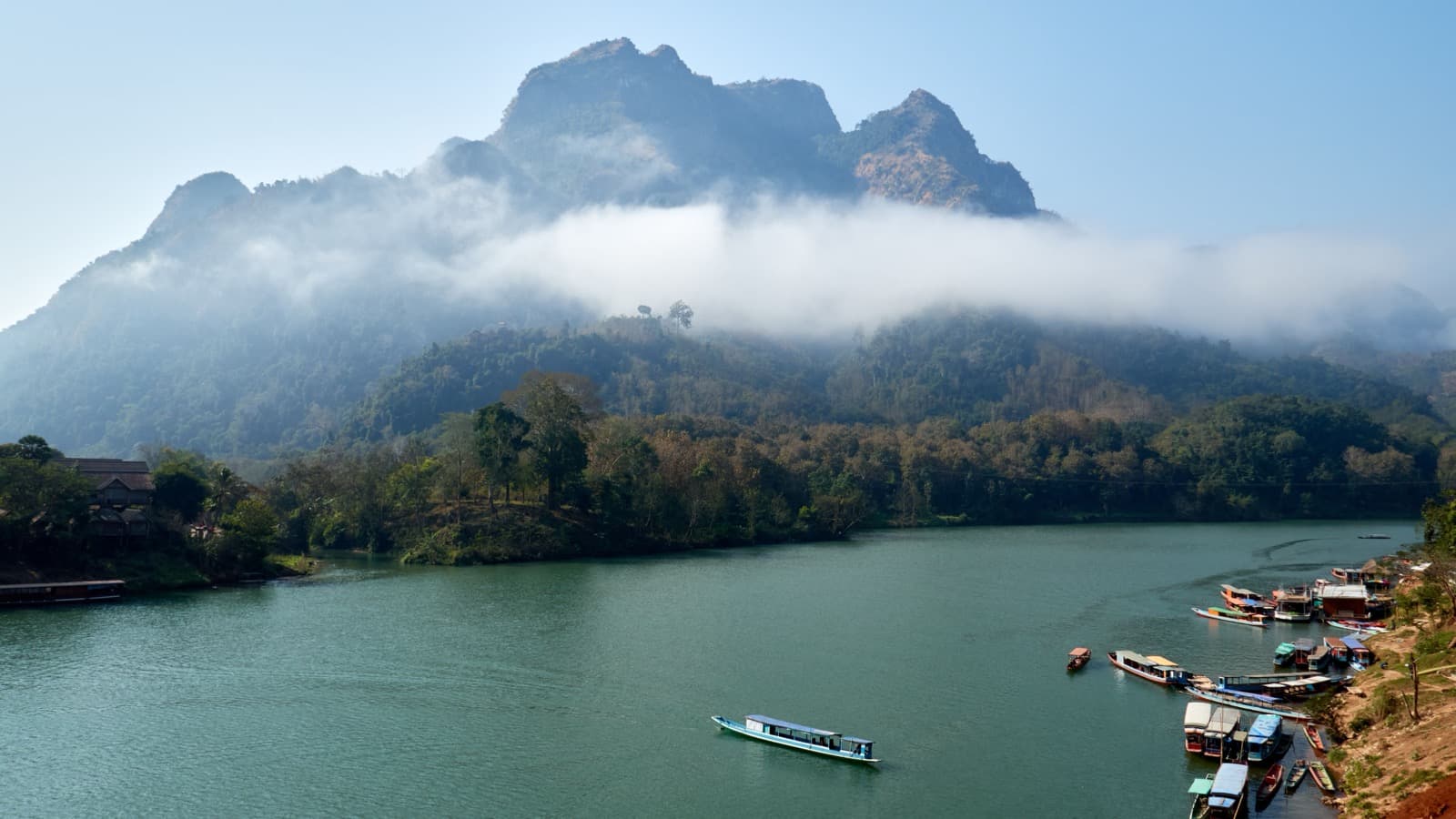
Laos has two seasons, not four: a dry season from November to April and a wet season from May to October. Vientiane and Vang Vieng sit in the same lowland climate zone, so the pattern below applies to both, with Vang Vieng's limestone hills running a couple of degrees cooler after dark.
November to February — the best window
This is the most comfortable stretch: daytime highs around 28-30°C, lows down to 17-20°C, and rain is rare. December and January are the coolest, with genuinely chilly mornings, especially in Vang Vieng. It is also the busiest tourist season, so book accommodation ahead around major holidays.
March to April — hot and hazy
Temperatures climb into the low-to-mid 30s°C, and this is also when seasonal agricultural burning across Laos and neighboring countries pushes air quality down. Hazy skies and elevated smoke levels are common in Vientiane through March and into April. Travelers with respiratory conditions should check local air quality during these months.
May to October — wet season
Rain becomes frequent from May, peaking around July and August with the heaviest, most consistent downpours. Showers are usually short and intense rather than all-day, and mornings are often clear. Vang Vieng's karst scenery and rivers look their most dramatic once the rains set in, and this is also the quietest and cheapest time to visit.
October — the shoulder month
Rain tapers off through October while the landscape is still green, before the dry season's dust and crowds arrive — a reasonable compromise if you want fewer tourists without the haze of March and April.